Piloting the 737
Understanding the physical feedback, analog roots, and operational quirks of commanding a Boeing 737.
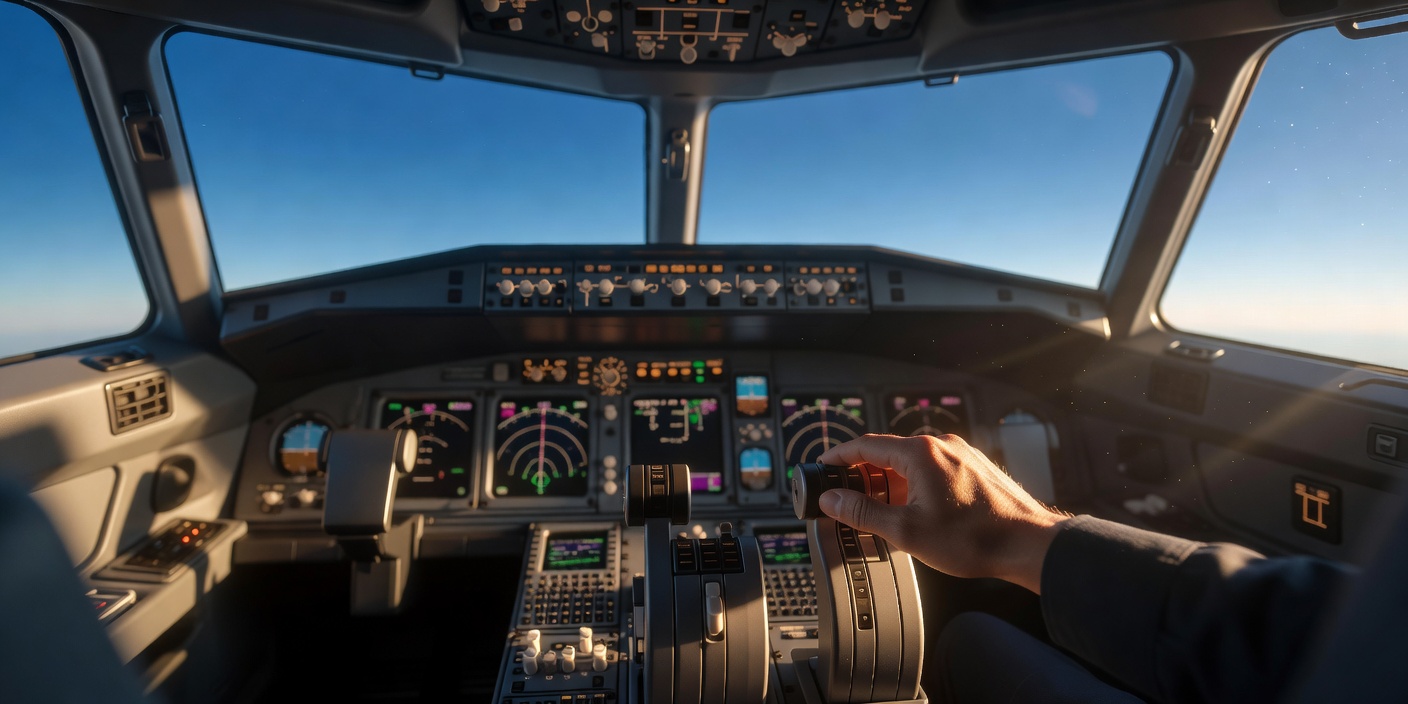
A Pilot's Airplane
In modern commercial aviation, fly-by-wire logic governs most aircraft. The flight crew sends electrical signals to computers, which then decide how to move the control surfaces. The 737 series (up to the MAX) operates differently. It is fundamentally a conventional aircraft; the control yokes and rudder pedals are connected to hydraulic actuators via physical steel cables.
This provides pilots with direct, tactile feedback. When aerodynamic forces act on the control surfaces, the pilot feels it through the yoke. For many aviators, this "heavy" and responsive feedback makes the 737 an incredibly rewarding, albeit physically demanding, aircraft to hand-fly, particularly in strong crosswinds or turbulent weather.
The Flight Deck Environment
The spatial dimensions of the 737 flight deck were established in the late 1950s (borrowing heavily from the 707). Consequently, the cockpit is notoriously cramped compared to contemporary Airbus designs. Wind noise is pronounced during cruise due to the blunt nose profile and older window sealing designs.
Boeing's philosophy insists on keeping both pilots in the loop. The control yokes are physically linked. If the captain pulls back on the column, the first officer's column moves identically. Similarly, the autothrottle system physically moves the thrust levers back and forth, providing an immediate visual and tactile indication of what the automation is doing.
The Mode Control Panel (MCP)
Situated centrally on the glare shield, the Mode Control Panel is the primary interface between the pilots and the autopilot/flight director systems. From here, crews manage LNAV (Lateral Navigation) and VNAV (Vertical Navigation), dialing in target headings, altitudes, and airspeeds.
Despite transitioning from mechanical dials in the Classic to digital displays in the NG and MAX, the physical layout of the MCP has remained remarkably consistent. This is intentional, preserving muscle memory for pilots transitioning between variants.
Fly-By-Wire in the MAX
While the primary flight controls (ailerons, elevators, rudder) remain hydraulically boosted via cables in the MAX, Boeing did introduce fly-by-wire technology for the spoilers. This update was necessary to optimize spoiler deployment for drag reduction and weight savings, marking the first time a primary control surface on the 737 diverged from the cable-driven standard.
Type Rating and Transition
A core selling point of the 737 family is the common type rating. An airline can operate Classic, NG, and MAX variants, and a pilot rated on the 737 can fly any of them following brief differences training (typically computer-based or minimal simulator sessions). This operational flexibility saves airlines millions in training costs, though the compromises required to maintain this commonality have defined the aircraft's engineering limits over the decades.