The 737 Classic Series
Introduced in the 1980s, the Classic series brought high-bypass turbofans and digital avionics to the world's most popular airliner.
The Need for Modernization
By the late 1970s, fuel prices were rising sharply, and noise regulations at urban airports were becoming increasingly strict. The original 737-200, equipped with low-bypass Pratt & Whitney JT8D engines, was both thirsty and loud. To remain competitive against emerging aircraft like the McDonnell Douglas MD-80 and the impending Airbus A320, Boeing needed to drastically improve the efficiency of their narrow-body offering.
The solution lay in high-bypass turbofan engines, specifically the CFM International CFM56. However, integrating a modern, large-diameter engine onto an airframe designed in the 1960s presented a profound engineering challenge.
The CFM56 and the "Hamster Pouch"
The original 737 was designed to sit exceptionally low to the ground to facilitate rapid baggage loading and passenger boarding without specialized stairs. This low ground clearance meant a large high-bypass engine like the CFM56 simply would not fit beneath the wing conventionally.
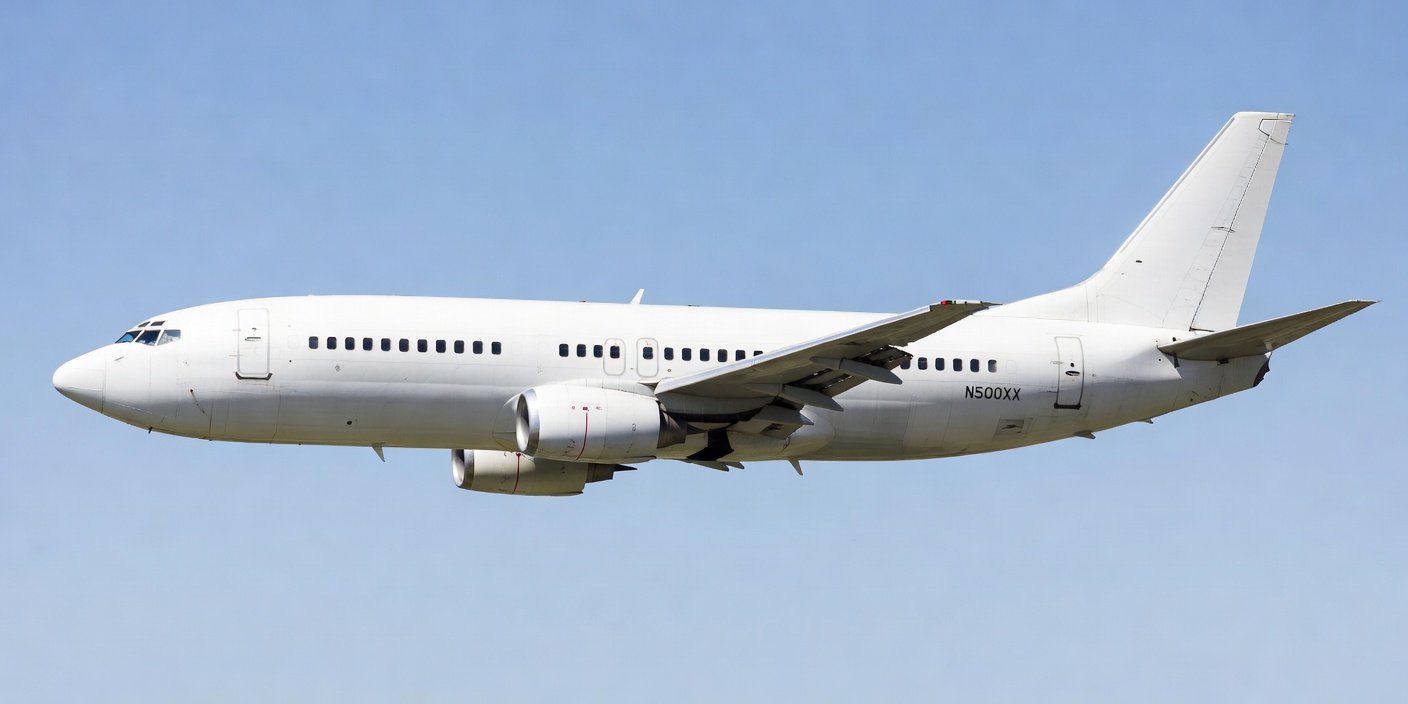
Instead of lengthening the landing gear—which would have required a massive structural redesign of the fuselage wheel wells and compromised the aircraft's weight—Boeing and CFM collaborated on an ingenious compromise. They mounted the CFM56-3 engine ahead of the wing on a cantilevered pylon and relocated engine accessories (like the gearbox) from the bottom of the engine to the sides. This resulted in the distinctive flattened, non-circular nacelle shape, colloquially known as the "hamster pouch" or "flattened bottom."
The -300, -400, and -500 Variants
The Classic series comprises three distinct variants, tailored to different capacity requirements:
- 737-300: The first to launch. It featured a fuselage stretched by 104 inches compared to the -200, accommodating up to 149 passengers. It first flew in February 1984 and entered service with USAir and Southwest Airlines later that year.
- 737-400: A further stretched variant designed to fill the gap between the -300 and the 757-200. It added another 120 inches to the fuselage, requiring a tail bumper to prevent tail strikes during rotation. It entered service in 1988 with Piedmont Airlines.
- 737-500: A direct replacement for the -200, maintaining the shorter fuselage length for long, thin routes. It offered the economy of the CFM56 engines with a capacity of roughly 132 passengers. It entered service in 1990 with Southwest Airlines.
Avionics and EFIS Introduction
Beyond aerodynamics and propulsion, the Classic series introduced a modernized flight deck. While retaining the mechanical dials and analog systems necessary for type-rating commonality with the older -200s (a key selling point for airlines like Southwest), the Classic incorporated an Electronic Flight Instrument System (EFIS).
Cathode-ray tube (CRT) displays replaced traditional electro-mechanical attitude indicators and horizontal situation indicators. The aircraft also integrated a Flight Management System (FMS), drastically reducing crew workload for navigation and performance calculations.
Legacy and Retirement
Production of the Classic series ended in 2000, with nearly 2,000 airframes delivered. While major Western passenger airlines have largely retired the Classic variants in favor of the NG and MAX, many -300s and -400s continue to serve globally as dedicated freighters, benefiting from their robust design and readily available parts network.