The 737 MAX Series
The latest iteration of the 737 family pushes aerodynamic efficiency to its absolute limits via new engines and advanced software integration.
The A320neo Challenge
In 2011, American Airlines dropped a bombshell by ordering Airbus A320neo aircraft, breaking Boeing's longstanding exclusivity with the carrier. The A320neo (New Engine Option) promised unprecedented fuel savings. In response, Boeing shelved plans for a clean-sheet narrow-body design and rapidly launched the 737 MAX program, aimed at re-engining the NG series to match or beat the neo's economics.
CFM LEAP-1B and the Geometry Problem
To achieve the required 14% fuel efficiency improvement over the NG, Boeing selected the CFM International LEAP-1B engine. This powerplant featured composite fan blades, an ultra-high bypass ratio, and highly advanced hot-section materials.
However, the LEAP-1B's fan diameter was 69.4 inches, significantly larger than the CFM56-7B. The 737's low ground clearance issue—first encountered with the Classic series—had reached a critical threshold. To fit the massive engines under the wing, engineers had to lengthen the nose gear by 8 inches, relocate the engine nacelle further forward, and mount it higher up, physically projecting above the leading edge of the wing.
Advanced Technology Winglets
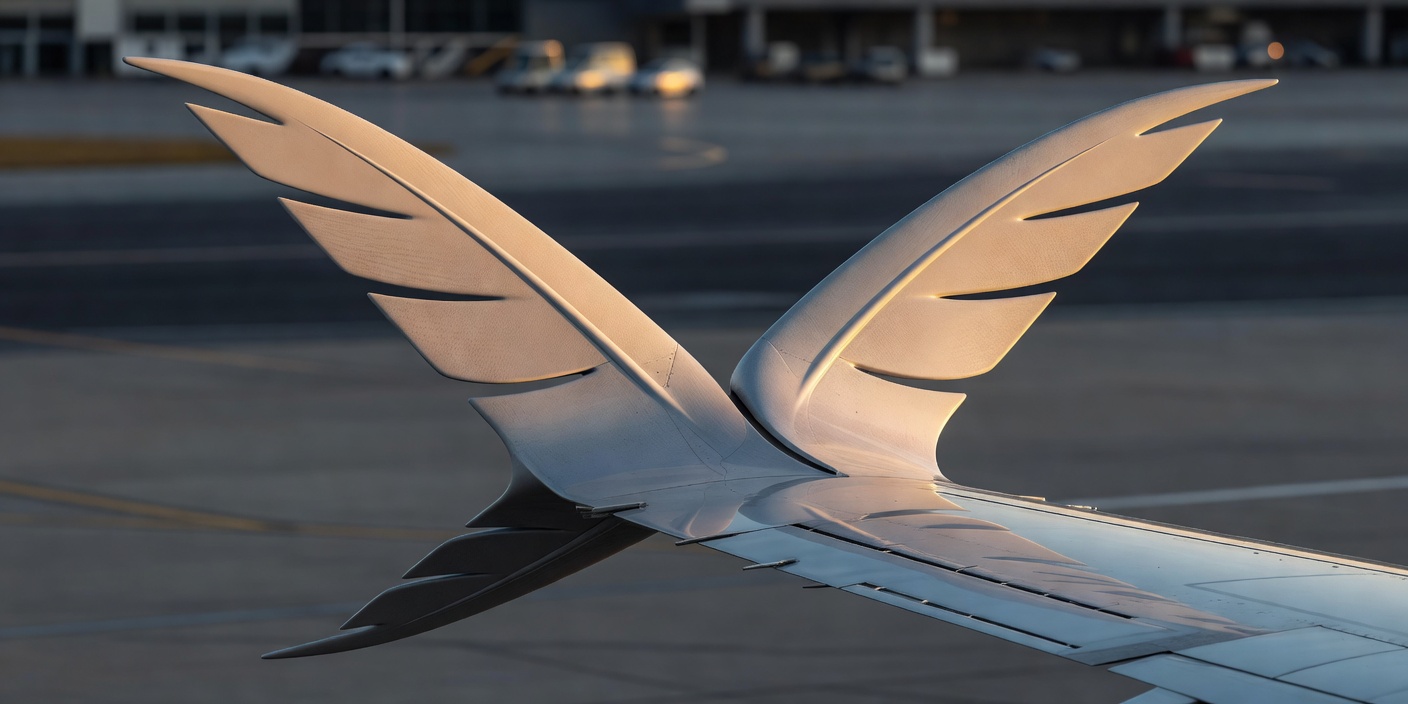
Aerodynamic refinement extended to the wingtips. The MAX introduced "Advanced Technology" (AT) winglets, replacing the blended winglets of the NG. The AT winglet is a dual-feather design pointing both up and down, optimizing lift distribution and mitigating wingtip vortices more effectively than single-blade designs, yielding a 1.5% fuel burn advantage.
The tail cone was also re-profiled to reduce drag, and the flight deck was upgraded with four 15.1-inch landscape LCD displays, akin to the 787 Dreamliner interface, though still running software designed to mimic older models for type rating compatibility.
MCAS and Flight Control Software
The forward and upward relocation of the large LEAP-1B engines altered the aircraft's center of gravity and aerodynamic profile. At high angles of attack, the engine nacelles themselves generated lift, which could cause the nose to pitch up further, approaching a stall condition.
To ensure the MAX handled identically to the NG (a mandate for keeping pilot transition training to a minimum), Boeing implemented the Maneuvering Characteristics Augmentation System (MCAS). Operating in the background without pilot input, MCAS automatically trimmed the horizontal stabilizer nose-down if a high angle of attack was detected. Flaws in this system's reliance on a single sensor, combined with a lack of pilot documentation, led to tragic consequences and the global grounding of the MAX fleet between 2019 and 2020.
Following rigorous redesigns, mandated dual-sensor cross-checking, and updated pilot training requirements, the MAX returned to service and remains one of the most rigorously scrutinised commercial aircraft currently flying.